





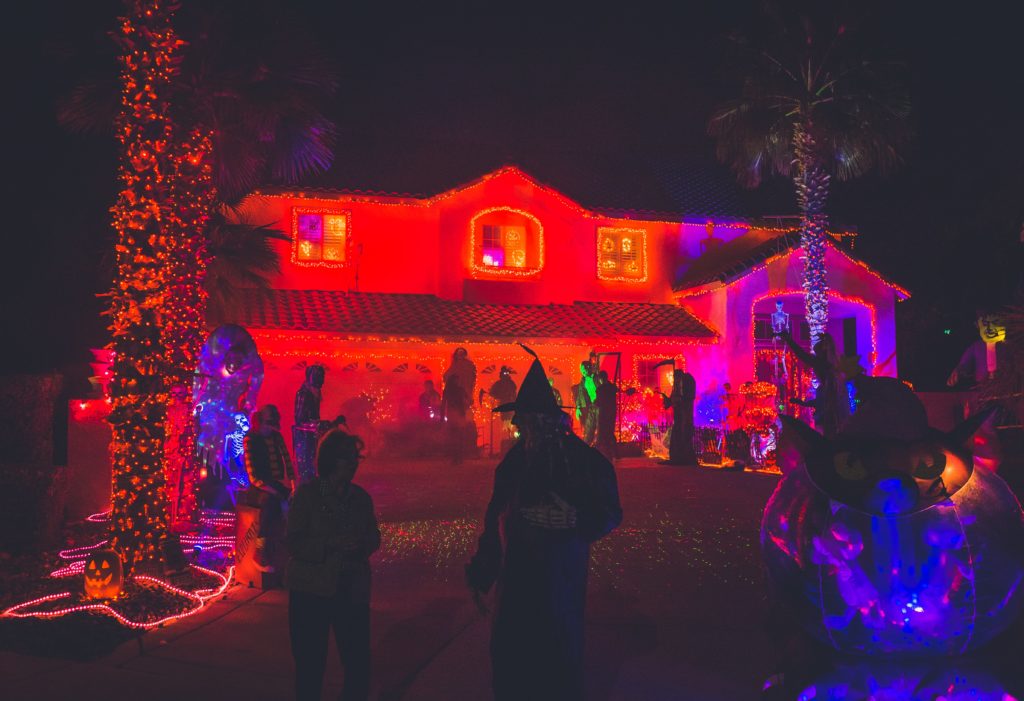
October is here, fall is officially in full swing, the summer heat has faded, and attention is turning toward the upcoming holidays. First on the calendar is Halloween, a time to celebrate everything creepy, crawly, and downright frightening. It’s the one time of year when spiders (at least the plastic ones) are welcomed into our homes, and when it comes to spiderwebs, the more, the better (as long as they’re artificial). While almost any spider can make a suitably spooky Halloween decoration, perhaps none is more iconic than the black widow spider. With its venom, unmistakably sinister appearance, and unsettling name, it’s easy to understand why this arachnid has become one of the most popular decorations associated with Halloween.
So, just how dangerous are these spiders, and what should you do if you come face-to-face with a real black widow instead of a plastic one?

What do Black Widow Spiders Look Like?
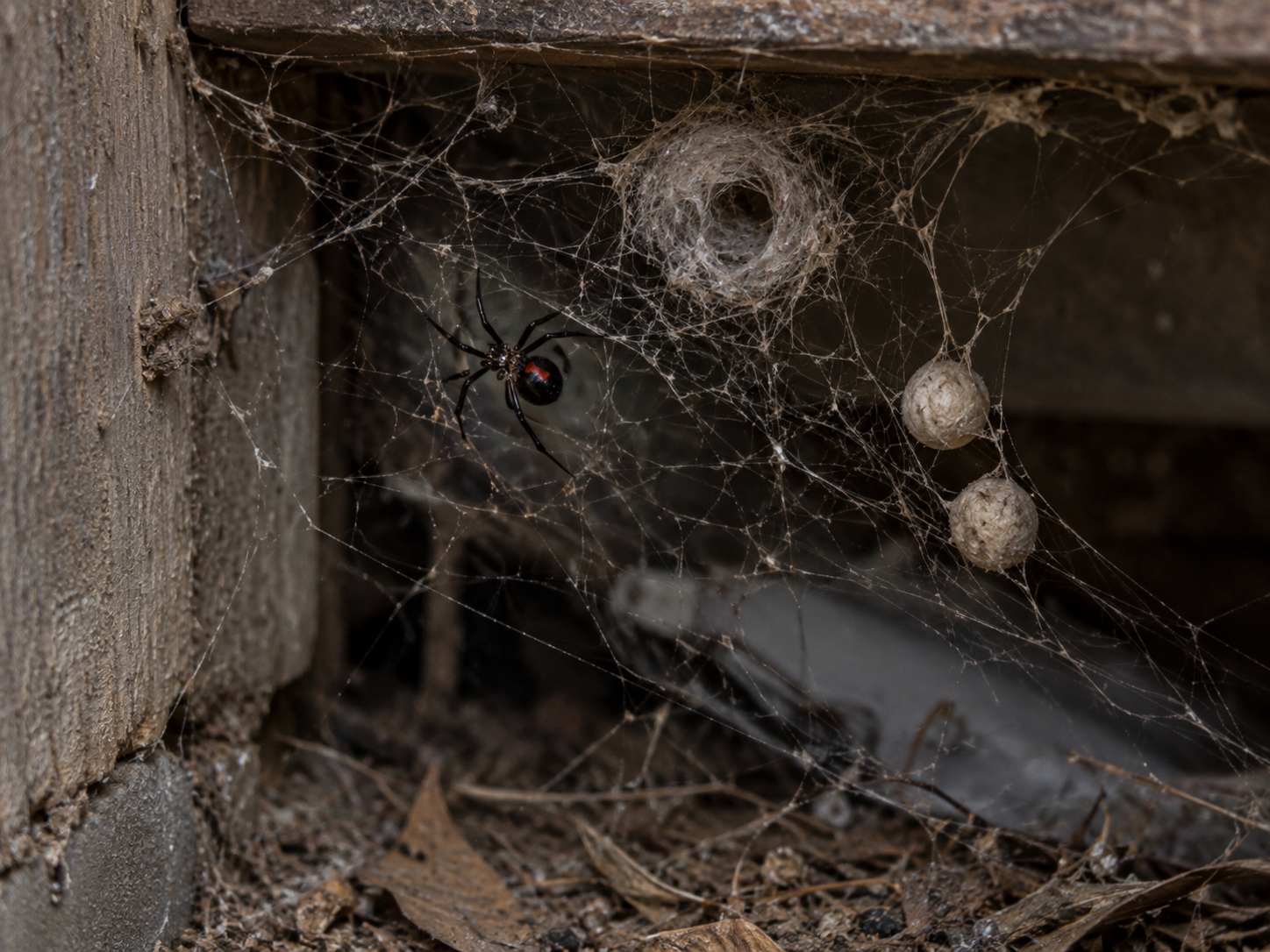
Black widow spiders have noticeably different appearances depending on whether they’re male or female. Females have the classic black widow appearance, featuring a rounded abdomen, shiny black body, and the recognizable red hourglass marking on the underside. They measure about 1.5 inches long, including their legs, with their body making up just under half an inch of that length. Males, however, are much smaller, with bodies measuring just over 1/4 inch. They also lack the familiar red hourglass marking, instead displaying white lines along their sides.
Are Black Widow Spiders Dangerous?
With venom reportedly 15 times more potent than that of a rattlesnake, black widow spiders are certainly a pest worth taking seriously. Their powerful venom affects the nervous system, but fortunately, they can only inject a tiny amount with each bite, making fatalities relatively rare. Still, a black widow bite is nothing to take lightly. Symptoms can include severe pain, muscle stiffness, nausea, vomiting, difficulty breathing, intense abdominal cramps, weakness, and tremors. While the risk of a fatal bite is relatively low, certain individuals are more vulnerable to serious complications. Young children, older adults, and those who are already ill are considered especially at risk. For anyone in these higher-risk groups, a black widow bite should be treated as a serious medical concern, and immediate medical attention should be sought.
Where are Black Widow Spiders Found?
Black widow spiders prefer dark, dry, and relatively undisturbed places, both indoors and outdoors. Outside, you’ll often find them hiding beneath rocks, logs, or decks, tucked away in woodpiles or tree stumps, or sheltered in holes along dirt embankments. But unlike some pests, black widow spiders are just as comfortable, if not more so, making themselves at home indoors. Barns, sheds, garages, basements, and crawl spaces are all common hiding spots, especially where there’s plenty of clutter and places to hide. Like most predatory pests, black widow spiders are also attracted to areas with an abundant food supply. That means any part of your home that attracts insects and other pests, such as ants, beetles, roaches, and scorpions, could also become an inviting place for these spiders to settle in.
What are the Signs of a Black Widow Infestation?
Besides spotting the spiders themselves, another way to identify a possible black widow infestation is to look for their webs in the places they prefer to hide. Unlike the neat, symmetrical webs you might expect, black widow webs are irregular, typically found close to the ground, and usually measure less than a foot across. They may also include a small retreat, a circular silk shelter less than 1/4 inch wide where the spider hides. Another warning sign is the presence of egg sacs hanging from the webs. These sacs are typically white, tan, or gray, round or pear-shaped, and have a papery texture. Measuring between 1/4 and 1/2 inch across, each sac can contain more than 400 eggs. That’s a lot of potential baby black widows! If you notice any of these signs around your home, give Mid-Cities Pest Control a call at 817-354-5350 or 1-800-310-BUGS (2847). We can take care of the problem and help restore your peace of mind.
How did they get their Name?
Black widow spiders get their intimidating name from the belief that females frequently eat their male partners after mating. While this behavior has been observed numerous times in captivity, where males have little opportunity to escape, it is actually much less common in the wild.
How do you Prevent Black Widow Spiders?
Keeping your home and yard less inviting to black widow spiders starts with two important steps. The first is to eliminate clutter and potential hiding spots where these spiders might build their webs. Outdoors, that means clearing away yard debris, tidying up woodpiles, and regularly cleaning sheds and other storage areas. The same approach applies inside your home: keep things organized and clutter to a minimum. Pay special attention to garages, attics, crawl spaces, and other areas that don’t get much regular use. Removing unnecessary items and keeping storage spaces tidy helps eliminate the sheltered spots where black widows like to hide.
The second step is to maintain regular pest control by calling The Bug Dude at 817-354-5350. Keeping insect populations under control around your home and yard reduces the spiders’ food supply, making your property a much less attractive place for them to settle. Remember, black widow spiders consider fire ants a tasty meal, so eliminating these pests offers a double benefit. Not only are you reducing the risks and problems associated with fire ants, but you’re also helping discourage black widows from making themselves at home on your property.

How do you Eliminate Black Widow Spiders?
If you notice signs of black widow spiders around your home or yard, don’t hesitate to call The Bug Dude at 817-354-5350. While these creepy crawlers make great Halloween decorations, finding a real black widow in your home is definitely no treat. Our experienced technicians can address the problem and help keep your home free from these unwanted visitors, so you can get back to enjoying all the spooky fun of the season without worrying about the real-life scares.
Further Reading:
“Southern Black Widow Spider” – Field Guide to Common Texas Insects – Texas A&M AgriLife Extension
“Black Widow Spiders” – PestWorld.org
“Black Widow Spider Bite” – WebMD
“This Bites: Venomous Spiders in Texas” – Texas Department of State Health Services

